Tuesday, October 3, 2017

World Maker Faire 2017

Working with students is the very best part of my job.  I get a chance to see the joy, frustration, humor, and serious learning that take place every time students are in the Light Lab, but I struggle to share that broadly enough with others.  I was delighted when I received word that we were selected to present at this year's World Maker Faire.  I know firsthand that our FCS students have plenty to share about the positive impact of Maker Ed. 

On September 24, Friends' Central students traveled the NY Hall of Science in Queens to present. I moderated our small panel of FCS teachers and students on the Make Education Stage.  Our goal was to share the power of increased student choice on engagement and learning in the context of two incredible fourth and fifth grade projects from last school year.


Panelists introduced themselves and shared a brief description of their projects.  Last year's fourth graders studied United States geography.  They each chose a state to research and brainstormed a unique maker project they would complete in order to demonstrate their learning for the community.

Students had full access to the Light Lab Studios and equipment.  More importantly, they were given a Maker Mentor - a community adult with a skill set that could support their personal project's development.   Mentors included faculty and staff members: art teachers, our technology integration specialist, science teacher, homeroom teachers, and our librarian. In one student's case, we tapped the expertise of an Admissions Staff member who just happened to be a professional musician and performer.

This shift to a more personalized approach to the fourth grade state project came in response to the homeroom teachers' desire to expand the range of projects.  Although given some choice in the previous years, students tended to gravitate toward models and a few digital productions.  

Adding Maker Mentors allowed for more one-on-one interaction and guidance through project development.  Conversations were deeper because each Mentor held relevant experience in the area a student was exploring.


Last year's fifth graders shared the projects they made while reading If the World Were a Village in Math.  Using global statistics about education, age, religion, and other subtopics, each student developed a project plan that would both demonstrate what they learned and point towards solutions to global challenges and inequities.  

Maker Mentors were again utilized in this project model successfully, and the range of projects was extraordinary.  From a model of a multi-generational community center to an interactive language translation board to a working water wheel, students created, shared, and developed with a new confidence in their ability to make a positive impact on the world.

Both projects culminated with a Community Expo - a chance for student makers to share their process and product, seeking feedback and reflecting on their learning.  This time reserved for feedback and reflection is not just an integral part of Maker Ed but also happens to be in complete alignment with our Friends' Central Quaker values.


I was especially taken with how our students shared the setbacks in their maker projects.  Each student came alive while reflecting on what was truly hard.  They smiled and laughed about how things kept falling apart or didn't work as planned, how they ran out of time or how they learned not to wear green in front of the green screen.  

Their failures didn't feel negative and they couldn't wait to tackle them a new way.  

This project model combined the best of any teacher's educational goals; our students grew socially and emotionally while also engaging in highly academic content.   

I am in awe of my students' bravery in sharing this experience on the stage at NY Maker Faire.  I hope their message inspires others to explore Maker Ed and encourages teachers to increase the amount of choice students have in creating things which demonstrate deep learning.


Wednesday, August 16, 2017

FCS Mighty Maker Camp: Week 1

We are wrapping up the summer in full maker-style with the first year of FCS Mighty Maker Camp in the Ulmer Family Light Lab.  Makers of all Lower School ages joined together for two themed maker sessions: Robotics & LittleBits Electronics and Invention Convention.


We started our week all together to explore the four unique makerspaces and the tools available.  Why use boring white name tags when you can design your own custom wooden name tags using Adobe Illustrator and the laser cutter?


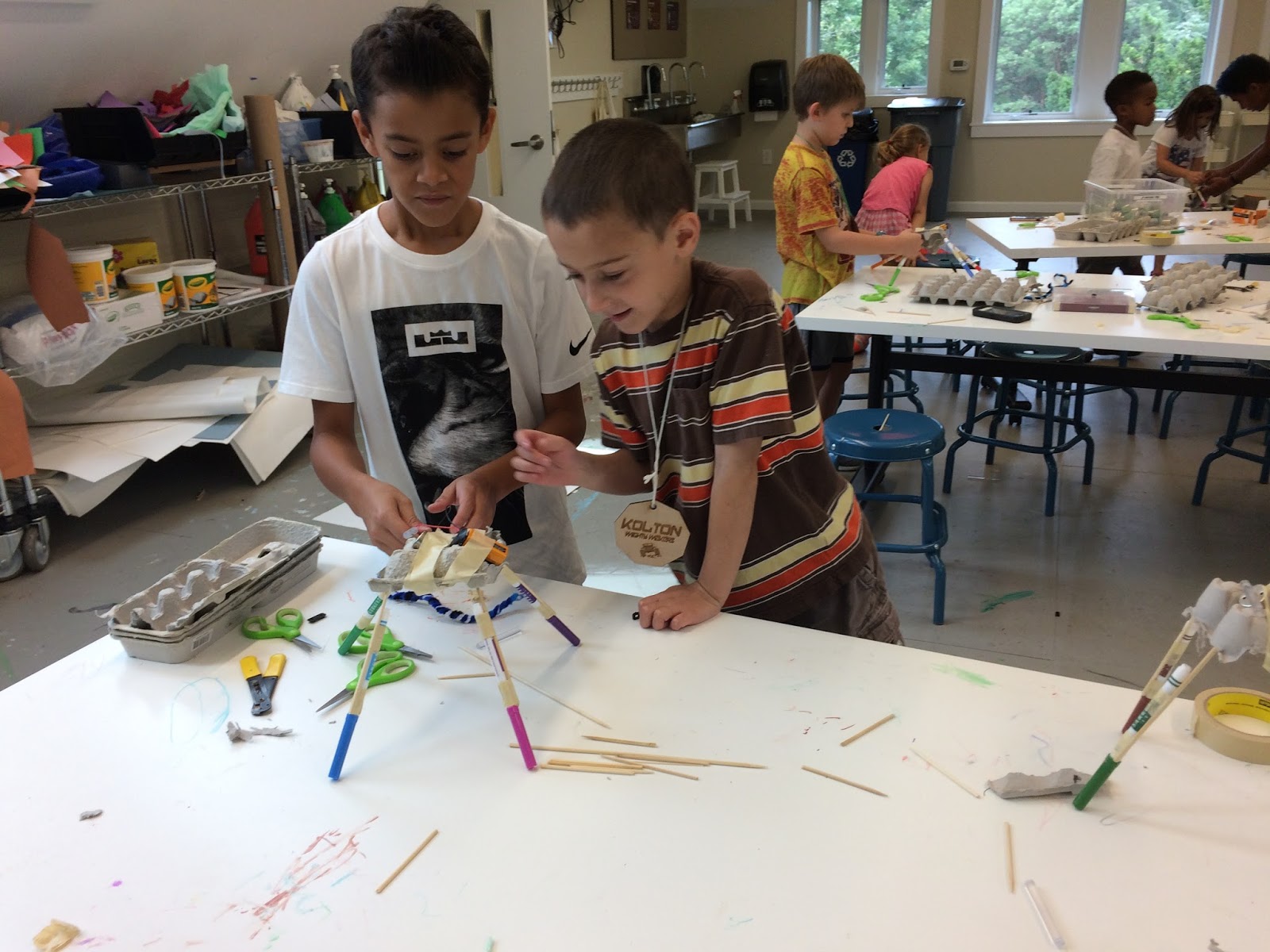
Next, makers built art bots that scribble, spin, and create unique marker patterns using the vibration from a motor and battery.  We made the bots' bodies using egg cartons, pipe cleaners, loads of tape, hot glue and wooden dowels to support the marker legs.  When we adjusted and optimized performance, we made a long mural with all our bots drawing at once.  Check out the video here.


Robotics and Invention Convention campers split up in the following days to explore deeper in their areas of interest.  Robotics & LittleBits used Bee Bots to make fun dance moves and put them together to choreograph a group dance party.  Video coming soon!

Our Dash robots played a wild game of Robot Basketball when we attached launchers and practiced sending our balls catapulting into baskets with different totals based on difficulty level.  Campers were intensely focused on making it into the smallest, tallest baskets to maximize points.  Players worked in teams of two to drive, launch, reload, and keep score.  We had a blast!


Invention Convention campers learned to use the sewing machine by making elastic bookmarks to take home.  They also explored Blockify, a great 3D design app, and printed their creations.  After learning about simple machines, they worked as a group to plan, draw, and build a Rube Goldberg machine aimed at popping a balloon.  Their sequence included a marble run, homemade basket, dominoes, pulley, and a nail to pop their balloon.  It was an unpredictable and silly labor of love.  Robotics campers were treated to the final run one afternoon.


Campers in this class also completed a Cardboard Challenge together.  They brainstormed and agreed on a building plan.  As a group, they used almost all the cardboard in the Light Lab to make large buildings complete with skylights, a working drawbridge door, and turrets.  They added finishing touches like sewn curtains and electronic lights just for fun.


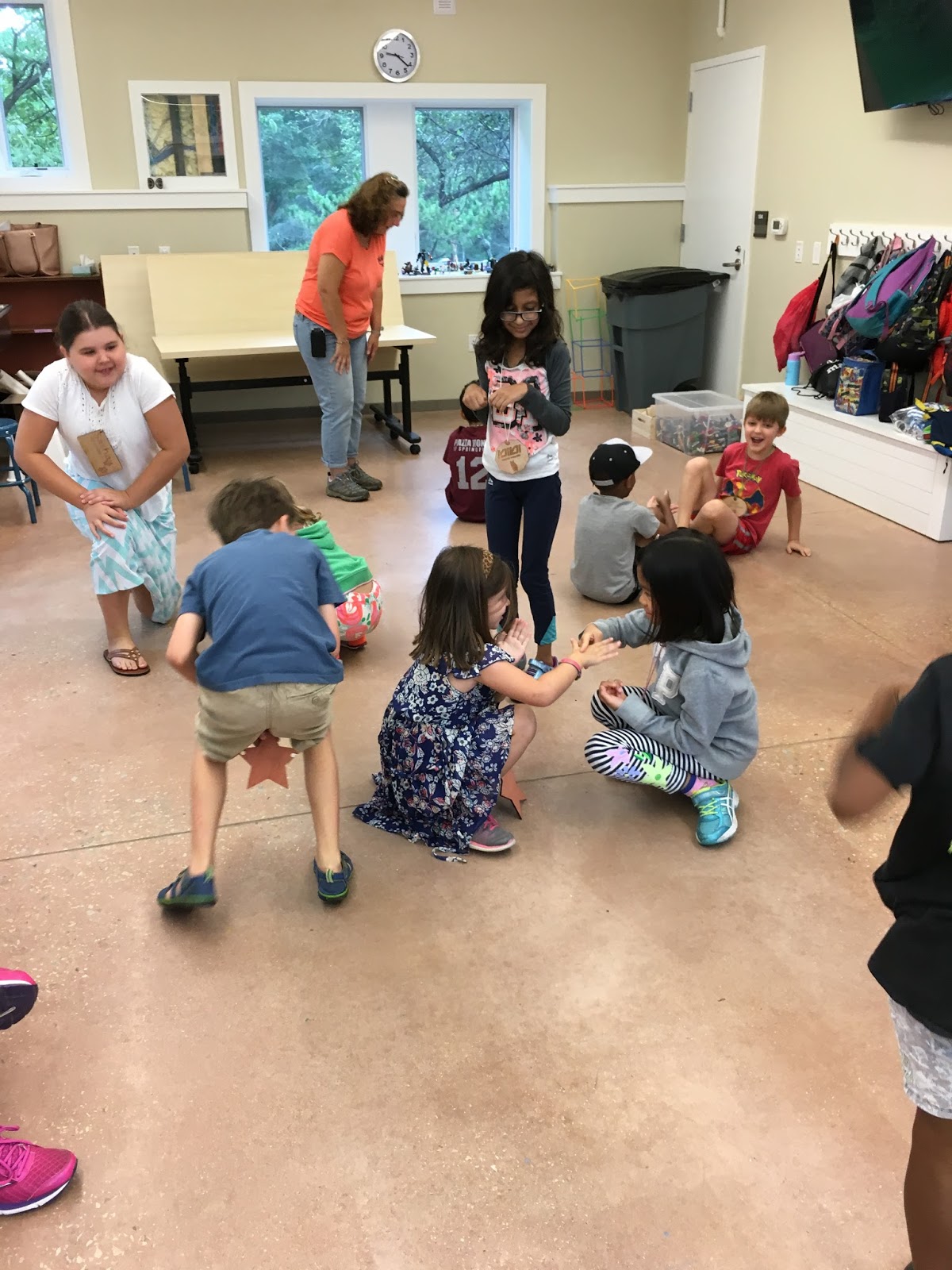
In between all our making, campers have enjoyed playing fun games to get to know each other, building with free build materials like Legos, marble run pieces, and magnets, and swimming.


We're looking forward to hosting families on Friday for the Inventor's Expo!

Monday, June 5, 2017

Media & Computing Studio

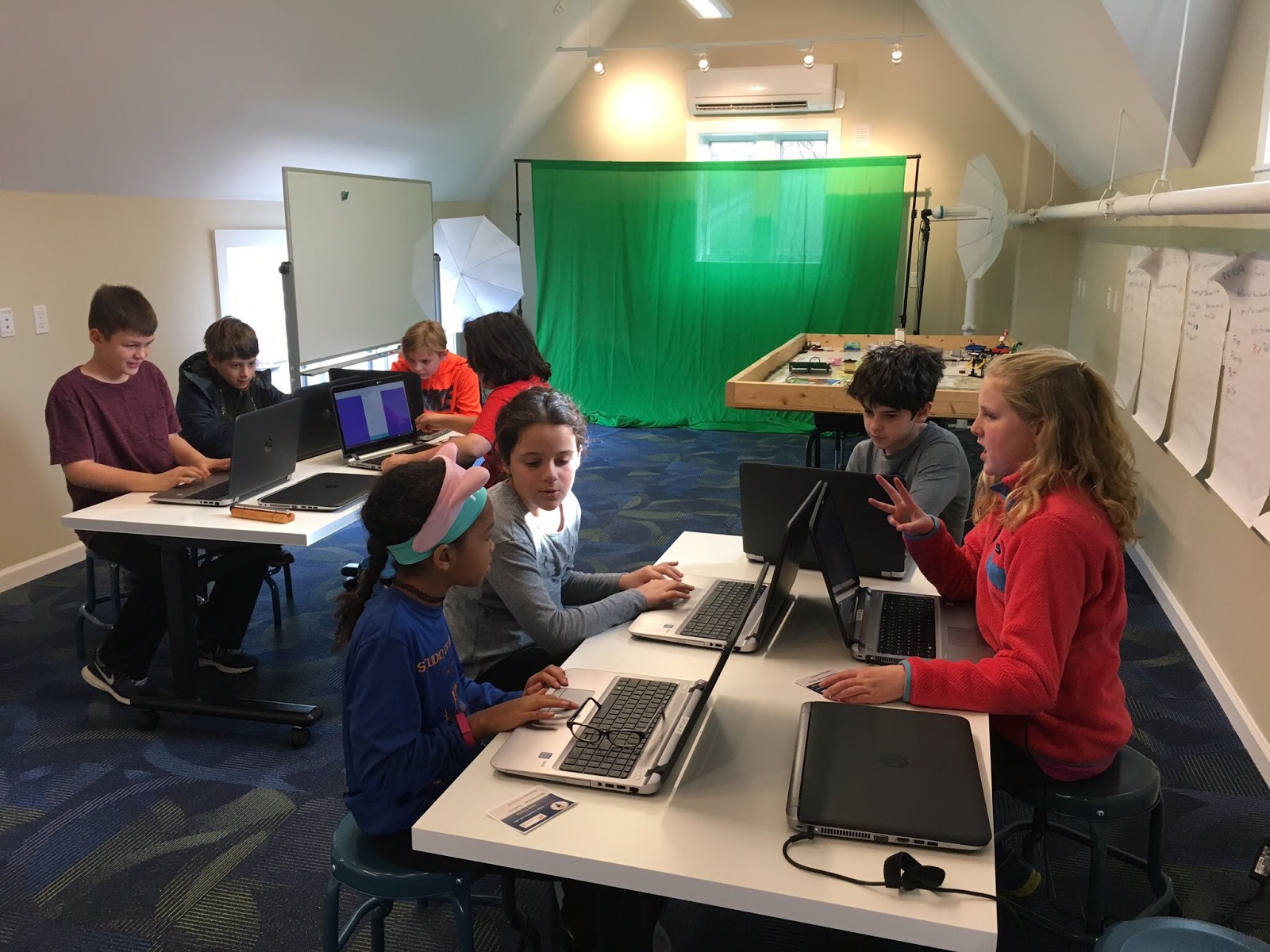
It seems fitting that I am finally getting to the last of the four studios, Media & Computing, as the year wraps up.  The Media & Computing Studio is the perfect flexible space for robotics, programming, film making and recording.

Just like our other studios, furniture is completely mobile.  Many times, the tables are folded up and pushed out of the way to provide an empty floor for robot racing or Lego building.


It is the only room with wall to wall carpeting to help control sound levels.  The windows have black out shades to help keep light levels even behind the portable green screen.  Wire racks house the library of robots and electronics, including BlueBots, Dash and Dot pairs, Lego Mindstorm EV3s, and Makey Makey Inventor's kits.


The green screen has been used by a variety of grades to film class movies, make commercials, and provide a digital option for open-ended projects. Most recently, Pre-KB completed their Road Trip Video  in front of the green screen with their homemade wearable cars.  So much fun!


Every teacher knows the value- and rarity- of a quiet space when trying to record student's voices or music.  The Media & Computing Studio even has a small soundproof Recording Room tucked in the corner.

Fifth graders used this space early this year to record their Kindergarten buddies' rainforest fun facts to use in their Scratch programs.  Second graders took turns recording voice-over for their cell animations in iMovie.   

Perhaps next year we will use this space for instruments and music composition.


The Media & Computing Studio wouldn't be complete without a class set of devices for programming and design.  The laptop cart lives in this room, but devices can be pulled at any time for use through the Light Lab.  

Our LS students are one-to-one with iPads in their classrooms so those frequently travel with kids over to the Light Lab. It's great to have choices so we can use the technology that best suits our needs for any project.


Our First Lego League team holds their Robotics Club in fall and winter in this space so the competition table is another addition to the room.  Each year, the board will get updated to reflect the new challenges.  Students use their iPads to program using the drag and drop LEGO Mindstorm platform.

Currently, third graders are getting their first exposure to EV3 robots during Science with Ms. B.  They are learning the basics of movement commands: how to control power, speed, direction, and duration.  Through a series of challenges, they use trial and error to move their bot around a course to avoid obstacles.


Coding Club has been using the space since the opening with Ms. Kirk exploring all our new bots and a variety of coding apps.  These kids have learned more than just the basics of coding for Dash and Dot as well as Scratch.  

Even the hallway outside the Media & Computing Studio is getting some use with our bots!


Ms. Kirk, Ms. B and I are really excited about the possibilities next year brings in expanding the programming and robotics curriculum for all our Lower School kids.  We will continue creating more opportunities at FCS for all age groups to explore the new literacy of coding.


Tuesday, May 9, 2017

Design Studio

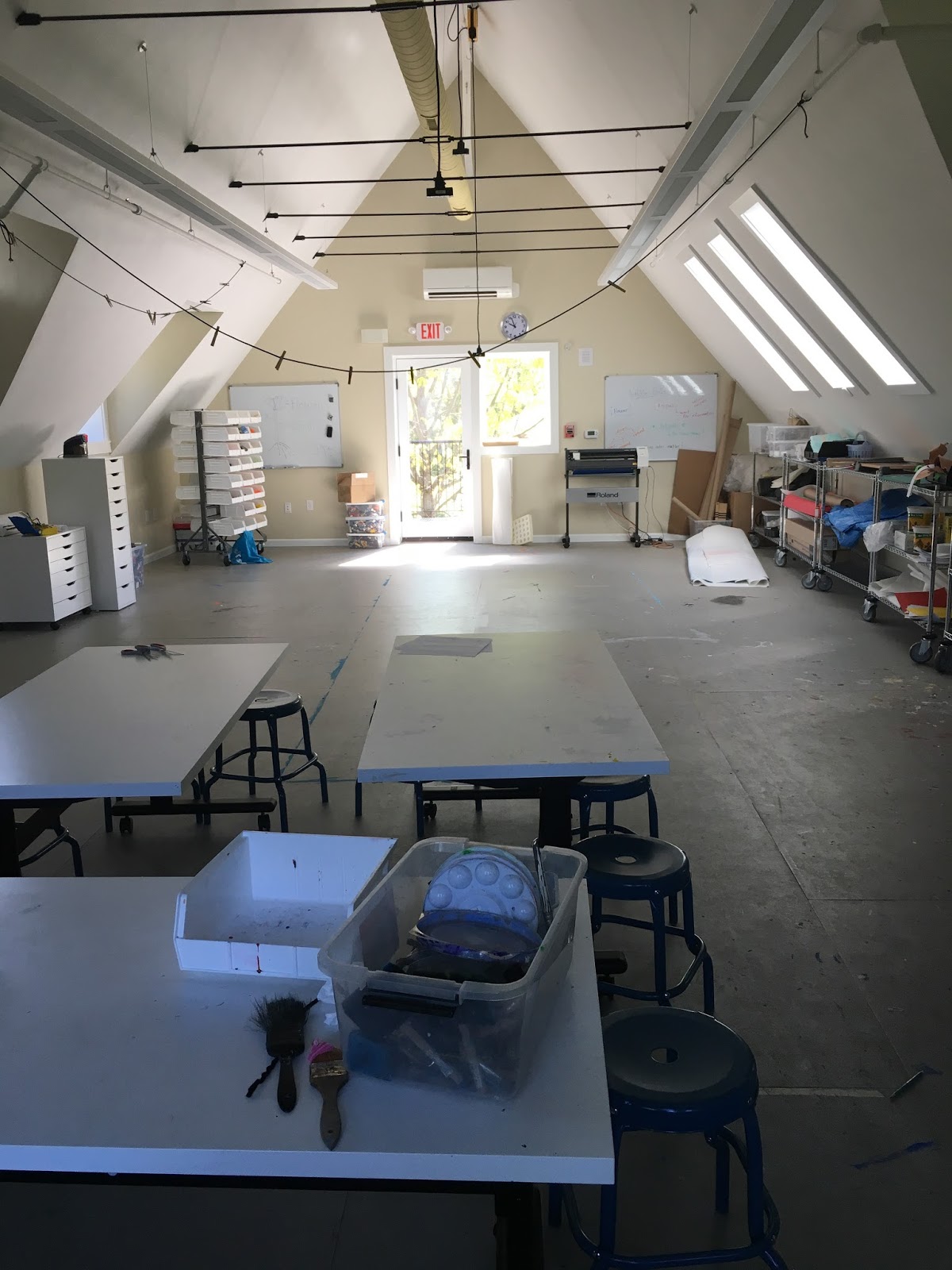
The Design Studio is the most flexible space in the Light Lab.  With beautiful sky lights and full access to a large balcony, this studio welcomes designers to use natural light and outdoor views for inspiration.

The floor was specifically left unfinished with painted plywood so it would encourage happy messes while kids create.  The flooring can also be directly drilled into in the case that we build something large that needs anchoring. It can easily be repainted or repaired each summer.


One full wall of mobile wire shelves is generously stocked with art supplies, recyclables for building, all types of paper, modeling clay, air-dry clay, model magic, popsicles sticks, stamps, pastels and fun design embellishments.


Although most of the higher tech equipment is kept in the Fabrication Studio or the Media/Computing Studio, this room has two vinyl cutters and a full LittleBits electronics library for prototyping and inventing.  Our Pre-K students used electronics earlier this year for their rockets and wearable cars.  Fourth and fifth graders had full access to the LittleBits during their State Fair Projects and If the World Were a Village Projects.

The Design Studio provides a perfect spot for large-format art; when the tables are folded and moved to the side, the vast open floor space allows classes to make scenery for a play or life-size models without taking precious classroom area.  Clothing lines give teachers the opportunity to hang projects that need time to dry, like paper mache globes from KB or Native American clothes made by 3B.


Ms. B has used the space frequently in Science this year for an impressive range of creative projects which demonstrate deep scientific learning.

Second graders designed animal or plant cell models with clay and used those models to animate the function of several organelles.  After importing the animations into iMovie, pairs recorded narration of what was happening.


Third grade scientists used their unit on human body systems as an opportunity to make life-size models of their own bodies complete with a skeletal, muscular, and respiratory system added in separate layers.


On most days, students are using the art supplies in this space to embellish and beautify their creations.  Paint supplies may travel from this space to any of the other studios depending on what other building materials or tools they may need.

The balcony gives us the perfect space and height to conduct some scientific experiments.  Fourth grade had an epic egg drop earlier this year.  Paper Engineering Club laughed and cheered when sending their parachutes and airplanes over the edge.


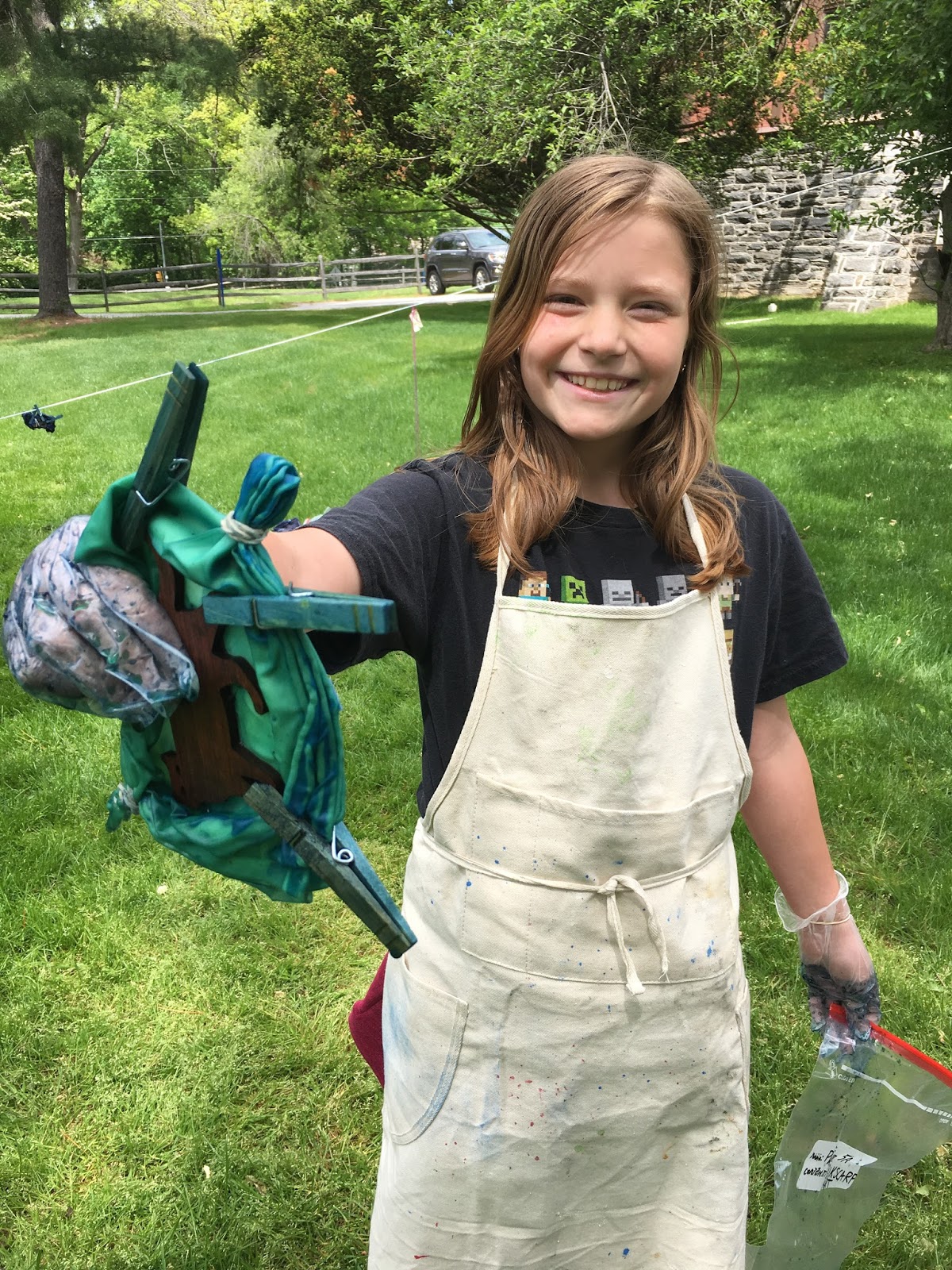
Currently, Ms. Parris is helping fifth graders explore Shibori dyeing techniques with the use of custom designed laser cut wooden shapes.  The shapes will be folded inside silk scarves and dipped in indigo dye.


 Ms. Parris even used the outdoor space behind the Light Lab, hanging drying lines between the tall trees.  We are all excited to see the beautiful results of this fun project!